Thursday, July 31, 2008

Tips for Form 5 Students (Good News 2)

A Form 5 student is feeling confused or kind of 'disoriented' when s/he is making decisions, be it concerning with subject choice or school choice for AS or A Level, after receiving the Hong Kong School Certificate from the school.   

Congratulations! it is normal, typical and no harm at all.  The fact that both primary and secondary school education has not prepared the school-aged students to make adequate decisions to optimize their chance for academic, social, career and life success, causes so much stress and suffering.   

It is not necessary for young adults to go through that much pain.  Struggling with decision making, even without appropriate training to manage this stage of personal growth, has waken up so many young people from a 'examination-driven' educational environment of schools.  And these young people, after receiving their CERT, are expected to make adequate decisions for themselves without much nurturing or capacity building on self understanding, options exploration, interests search and knowledge about Person-environment fit.... Overnight, they become grown ups, at least they are expected to be.

The good news is..... in the long run, a life-long learner has to merge individual interests, intellectual ability, problem solving skills, field experience, friendship experiences, and advanced training to transform into a unique skill set, special tools and expertise to serve the wider community.  

My experience is to FOLLOW your genuine interests.  Only by doing so, you can earn as much professional and personally relevant information and accumulate powerful network and expertise to stand on your own feet, stand up for a meaningful course, speak up for those you serve and grow up as a person with integrity and inner fulfillment.

Don't worry about the confusion, lack of confidence and even kind of 'disorientation', we are all like that at different times of our life.  It is okay.  It is normal. You will be fine.  Inner directions? Clear direction?  No one can give you the right answer.  This is a very personal question.  Nonetheless....

Mother Theresa once said that our inner direction is where we experience the deepest inner joy.  


Wednesday, July 30, 2008

Tips for Form 5 Students (Good News 1)

The day we received the certificate in the school, our principal, an Irish sister (Catholic Nun) told us that how well we did on the public exams should not be seen as anything significant to, at least 3 figures in our lives.

First, your husband
Second, your children
Finally, your father in heaven

We laughed.  I have to express my heartfelt gratitude to our principal. She made us learn to take things, however significant, in perspectives.  The most consoling message is that IN LOVE, NO FEAR.  


Monday, July 28, 2008

As a father...

it is hard to share personal feelings, be they positive or negative, with others.  Nowadays, men are expected to share the responsibilities of taking care of the children and house chores.  Even more challenging, at times impossible, is to deal with the emotions and needs of our spouse and children.  

To what extent, do men need stress reduction techniques? How do they manage the parenting stress? 

Sunday, July 27, 2008

Does giftedness mean academic performance ONLY?

While there is a growing interest in the wider society about giftedness, intelligence and radical acceleration, there isn't much development in promoting the understanding of how and why the gifted individuals think and feel about themselves and the community.  

In 27th July, Jo was invited to present about UNDERSTANDING the Gifted in the 2008 HK Book Fair. The key ideas of her presentation is NOW available for download.  

Jo is excited about the positive feedback and enthusiasm of the audience towards the development and wellbeing of the gifted individuals.  In addition, the presentation of Dr. Eunice Wong, as always, provides us a thought provoking perspective to understand the nested but interrelated structure of the (cake) layers of human development.  Her nested model actually promotes our understanding of the entry point of intervention.  Last but not the least, special thanks to the Yellow Bus, especially Helena Hui, Mable & Cherris Chan, making the activity so smooth and successful.  Wait and see when the Yellow Bus will come again and bring you good news about caring our children and their parents.  Bye for now.

Monday, July 21, 2008

Stay Happy

Are you happy? Are there tips for staying happy when you are bored or too busy with your work or studies?

I guess gifted persons are expert of discovering deep joy.  If there are people responsive, resourceful and supportive to give some advice, feedback or even guidance relevant to the source of their deep joy, the gifted persons actually have greater chance to identify an achievable and rewarding goal for their life.

Happy 5 minutes

Go downstairs to buy something from 7-Eleven, Soya milk, coke light, chicken wings, iced latte, call a friend, reading magazines or newspaper on the shelf, or chat with people or even strangers leaving them with a touch of warm greeting or caring words, what else could one do to expand that 5 minutes happiness ?


How to be happy?


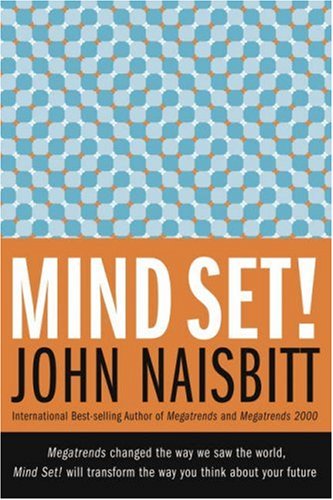
For years, I have been facing the rapid changes of demand and expectations in the market of human services.  My main concern is about how to get the school-aged children and their families ready for building up capacity to lead a competent, achievable and rewarding life. For me, HAPPINESS is maintaining room temperature of 24 oC or lower with abundant sunlight and reading books about the trends of the 21st Century. What I want to do is to explore creative but proactive ways of managing personal life. I feel so appy that I can plan for the future with lots of background information from some thought provoking work like books written by John Nasbitt and Kennichi Ohmae. Yesterday, I happened to have a free afternoon to read and then share with my husband.  It's a delightful experience.

Friday, July 18, 2008

GD Get Directions??

Get Directions for Making High School Choices

I enjoy visiting Private Boarding Schools in the States. In the past few years, I did campus tours around cities in the north east coast of the USA for getting more information about the schools and expanding the school options to the students. I liked to know how schools differed in terms of their curriculum, learning environment, school culture and the impressions that their students gave me.


I found that there would be a greater chance to get into some prestigious High Schools in the big cities like Boston, New York, New Jersey and Baltimore if your child applied for grade 9. Of course, not all boarding schools accept grade 9 overseas students. After all, making a good choice of High Schools much depends on the extent to which the school characteristics match with the personal characteristics of the student par se.

Generally speaking, I would recommend middle size schools to students who are kind of introverted. In addition, special learning support is particularly important for students who have attention deficit hyperactivity disorders, non-verbal learning disabilities and other processing problems. Students whose self management skills, organization and self care lagged behind, should not be expected to grow out of these struggles once they studied abroad. Special learning support to coach the students to cope with their organization difficulties should be given before study overseas. These issues, if not adequately managed at the high school, would turn into risk factors for college drop out.

Sometimes the parents may assume that sending their gifted children to boarding school is the solution to their chronic problems of under-performance. In my point of view, teasing out the issues underlying underacheiving behaviors of the students should go first. If parents put those unresolved problems of their children to the hands of school teachers, there might be higher risk of their declining motivation for school achievement because these teachers did not know them well and the teacher-student rapport definitely takes considerable time to build up. My advice is don't take boarding school to do magic for your child. Intervention should start as soon as possible. The best scenario is starting intervention early and keeping up the positive outcomes of intervention measures in the boarding school.

The best timing for application, I think, is to prepare your Grade 8 children for the SSAT or TOEFL about 8 to 9 months before studying at your target boarding school. To promote the readiness of taking those public examinations, learning behavior, cognitive, affective, social and neurodevelopmental issues should be screened and ruled out. In case intervention is needed, the students will take about 6 months for some remedial training and other treatment plans. During the 6-months treatment, the behavioral intervention and other progress could be recorded and presented as evidence of effective changes. The teachers in the new boarding school can do follow-up for the individual student rather than starting a new case file.

Moreover, it is strongly recommended that a thorough physical and mental health checkup be done not just for fulfilling the school requirement of application but also screening of problems particularly mood disorders like anxiety, bipolar disorder and psychosomatic issues. 

GD? Gifts Differ

Q: Do your gifts or giftedness differ from what other people may expect?

Gifts differ. Yes, it is one of my favorite books. I like it because the book explores different facets of individual talents and strengths.

The notion that 'gifts differ' really means something to me. It is not just an idea. It is exactlly what I find in people because the gifted show me. They show me how unique their individual gifts or talents can be. The more diverse gifts I see, the stronger the trust I have. As long as individual gifts differ, hopes are there.

I work with gifted individuals at various age levels. They are uniquely self-driven and particularly sensitive to the values and meaning of life. At the core of their mental energy I can feel the power of passion. It is there. However young, it is already there.
Passion first
With that passion, even the very young gifted child can put their motor skills, language skills, spatial skills, sequential skills together and mobilize these skills to acheive some personally important goals as efficiently and effectively as possible. For example, they may make different shapes of playdohs to do farm houses, snack and even character figures to make up stories. They may organize their toys and know exactly when to present which character and how, as well as what to say to form a coherent story with logical sequence. All in all, they employ a wide variety of skills to help them explore and express their ideas, feelings and interests in a creative way.
Personality interests.


Driven by passion and orchestrated different skills, the gifted individuals will choose to do something they feel like. In other words, they will have personal preferences. These preferences are substantially predisposed by their personality differences. For example,we won't expect two gifted children at similar age, intellligence level, of same gender, at similar family background and with compatible academic performance to show similar behavior in the way they relate to people, process information and do things when one child is very extroverted and the other one is very introverted. Likewise, a gifted child who is very relationship-oriented, sensitive to how people feel, caring and uncomfortable with arguing and conflicts may set priorities for how they want to learn and contribute in a way different from another gifted child with different personality characteristics. A gifted child who values reasoning, logical thinking, expertise and personal achievement may be more interested in 'KNOWING WHAT TO TO MAKE THINGS WORK EFFICIENTLY' rather than 'LEARNING WHAT TO DO TO CARE For PEOPLE".

We can't overlook how personality characteristics energize gifted individuals. The personal strengths can be magnified tremendously when the gifted individual choose a path compatible with her or his personality characteristics. For example, the path for getting highest level of performance for an introverted person and an extraverted person is very different. The extraverted person may be good at exploring and exploiting his or her social resources and networking whereas the introverted person may be good at building up expert knowledge demanding intense focus, intellectual passion, keen interests in working with ideas and concepts, insightfulness and so on. In other words, people needs different resources, means, facilitative agents, process support and priority for acheiving their highest level of functioning. In short, the path facilitating the competitive advantage of the personality specific strengths is promoting the chance for fruitful and meaningful achievements.
Parent-Child Connection 


Gifted children are lucky if their individual strengths are found in their parents who have good relationship with them. Sometimes, gifted children shared some strengths with one of their parents who may have difficulty to recognize or appreciate that particular strengths. When parent-child communication is onsistently difficult, the best thing to do is to examine what counter-productive patterns have been established and then explore the personal meaning of these communication patterns to the family members.

The fact is, acceptance of individual differences, even giftedness, talents and personality characteristics, grows out of a long process. It is so hard for the adult caretakers who are uncomfortable with their own personality, strengths and uniqueness, to show acceptance to their children. Only have we been comfortable with our selves, physically, psychologically and spiritually, can we be emotionally available to the children. Too busy things or people associated with stuff of high emotional voltage, the adult caregivers can not have peace in mind and stay relaxed, openminded and positive enough to receive the uniqueness of another individual, however young or old.
Personal Growth


It is always important to understand that there is always room for personal growth when we reflect on the interpersonal relationship with our family members. I am not saying we should expect others to seek personal growth all the time. Self commitment to on-going personal growth makes ourselves a powerful change agent in our families. The longer it lasts, the more life changing the outcome.
Self Acceptance. When we are comfortable with ourselves, we can build up greater positive energy inside. Then we can appreciate the positive power of our own personality characteristics. With greater positive power of self acceptance, we are more likely to identify strengths in our children and strengths in our selves to accept their soft points and needs. In such a positive emotional environment, we are ready to influence our children by showing our strengths and care to support them. At the same time, we are strong enough to tolerate the weaknesses or challenges we find in our children.

The essence of maximizing different gifts in our gifted children is acceptance. I believe that proper maintenance of mental health care is the bottomline because mental health issues are both the cause and result of failing individual gifts in the family. After all, the most important solution is, not psychiatrist or psychologist, but love. Professional expertise is the means whereas Love is the solution. As gifted individuals, regardless their personality characteristics, are endowed with a more complex brain typical of complex feelings and thought processes. There is nothing trivial to them. Their mind and emotions are always busy because this is how their brain works. In the middle of a stormy ocean of thoughts, knowledge and emotions, I trust that love and only love can calm the storm, calm the fear. Whose love? The love that takes us here. Yes, this is love.

Gifted Development

Despite diverse conceptions of giftedness, I couldn't find any other way to describe the impact of giftedness on onself as compelling as the Columbus Group (1991).

"Giftedness is asynchronous development in which advanced cognitive abilities and heigthened intensity combine to create inner experiences and awareness that are qualitatively different from the norm. This asynchrony increases with higher intellectual capacity. The uniqueness of the gifted renders them particularly vulnerable and requires modifications in parenting, teaching and counseling in order for them to develop optimally." (The Columbus Group, 1991, as quoted in Silverman, 2000)

In the past 10 years, among the hundreds of families I worked with in Hong Kong, I found lots of gifted individuals in pain. Dr. Linda Silverman put it very concisely that .....

"It is painful to be different in a society that derides differences......

Pain may also come from internal sources-from a finely tuned psychological structure that experiences all of life more intensely.....

Giftedness has an emotional as well as a cognitive substructure: Cognitive complexity gives rise to emotional depth. Thus, gifted children not only think differently from their peers, they also feel differently." (Silverman, 2000)

Families struggled with parental stress, lack of school support and community care, interpersonal communication, helplessness and so on. Whatsoever the struggles, you just name it, the underlying issues look like the same. Talking without speaking, hearing without listening, voices that never heard, wisdom that never received, souls that never touched....

Many times when I helped the individuals tell about their inner experiences, their families became awakened. Like landing on a new horizon, from that moment, the family could see what the gifted individuals felt and who they were. Regardless their age levels, how finely tuned their feelings, perceptive their mind, insightful their thoughts, observant their eyes, value-driven their passion, caring their hearts.... the gifted individuals are always ready to tell what they are passionate about and how they want to be supported to make something they see as important happen. 

The greatest challenge is how to handle misunderstanding and mismatching when the gifted individuals 

are too young to speak up for themselves, 
'too bright' to know something, 
'too advanced' to teach, 
'too independent' as a student to tell what directions s/he wants to pursue and how s/he wants to learn', 
'too scared' to tell you their true feelings, 
'too compliant' to refuse arrangements against their preference, 
'too accommodating' to assert their needs, 
'too hurt' to receive love and care, 
'too self-reliant' to ask for any help, 
'too resentful' to trust, 'too mature' to initiate changes, 
'too old' to take the lead, 
'too isolated' to be part of the community, 
'too late' to reach out, 
'too self-giving' to be cared for,
'too modest' to be forgotten

We understand the silent impact of giftedness on these individuals. They are borne to be gifts of the world. They simply want so much to offer their passion. They are called to make an impact on things and people they care about. 

They need nothing particular. The greatest gift I can give to these gifted individuals is and only is HONOURING their UNIQUENESS.

I would invite everyone who care about optimizing human potentials to care about the inner experiences of the gifted. While the prevailing views of giftedness are about academic performance and intellectual advancement, I would love to highlight the passion of the gifted. I couldn't find any description as beautifully stated as Dr. Annemarie Roeper and Dr. Michael Piechowski.

"Giftedness is a greater awareness, a greater sensitivity, and a greater ability to undnerstand and transform perceptions into intellectual and emotional experiences." (Dr. Annemarie Roeper, 1982) "One of the basic characteristics of the gifted is their intensity and an expanded field of their subjective experiencs.... It is not a matter of degree but of a different quality of experiencing: vivid, absorbing, penetrating, encompassing, complex, commanding--a way of being quiveringly alive." ( Dr. Piechowski, 1991)

Taken together, I believe that one of the fundamental issues of support to the gifted individuals is acknowledging the life-long impact of giftedness on the person. How it affects the way the gifted individuals think, feel, care, learn, share, work and make an impact. In other words, what is the impact of giftedness on the individuals, families, community and wider world. 

Without deeper understanding, the support we give to these gifted individuals and their families may not meet their needs. Even worse is the support not matching their needs, it is getting into their way, becoming counter-productive and, turning out to be a burden. 

It is important that understanding of the gifted starts with a greater awareness of individual uniqueness, caring for the gifted begins with our faith in their passion and readiness for being flexible and openminded. 

Growing up gifted

I didn't have any clue about giftedness. It was not until my elder daughter assessed by Dr. Martha Morelock, a renowned scholar in profoundly gifted children. She is famous of her work with Dr. John Feldman in Tuft University. At that time, my daughter was six years old. My husband and I were doing our graduate school at the University of Melbourne. After the assessment, We were eager to look for resources from internet, books, research papers, expert articles, just from everywhere.

I was disappointed that there was not much except trade books, theories and popular models of thinking. There was almost nothing I could rely on for continuous support to optimize the development of my child as a gifted individual in Hong Kong.

Then I had to count on myself. Since then, I took several courses taught by Dr. Morelock in 1996. Later, I met Dr. Linda Silverman and did a summer school program learning from Linda about gifted development, assessment and counseling in 1997.

Gradually, I noticed something strange. In retrospect, my greatest passion had been learning. But this time, I found my study on the gifted development different from any learning experience I had before. It was not learning, it was a profoundly psychological experience consuming not simply my mental energy but also my heart and soul. A new level of consciousness unfolded and a different view about myself and the world emerged. The most amazing thing was seeing how my spirituality, psychological knowledge, personal growth and professional developments merge closer and closer. While I was reading the literature about exceptionally gifted, I was not reading. I was joining these gifted individuals. I was in them and they were in me. I had never been that close to my family, especially my grandpa and parents, because I could better understand the meaning of their life events and appreciate how unique their life journey turned out to be.

The whole experience of entering into the realm of gifted development is not simply eye-openning. It is life changing. I always give special thanks to Dr. Linda Silverman. She made me understand who I am and what I am aspired to be. She has been a significant life changing agent in my life.

When my family was about to leave Melbourne and relocate Hong Kong before the 1997 takeover, I made up my mind that I should be the ultimate advocate to my gifted daughter. I would be as resourceful as possible to make the support she needed access to her. In 1997, I started working with gifted children in Hong Kong and doing the groundwork for providing psychological and educational support to gifted children and their families. In 1998, Dr. Silverman accepted my request for her supervision and internship at her Gifted Development Center at Denver. She intruduced me to the summer program conducted by Professor Michael Piechowski on the emotional development of the gifted. The course was run at the Denver University. The course materials covered psychosynthesis and the longitudinal research on over-excitabilities of the gifted. Since then, I discovered how advanced emotional development was part of the gifted 'package' and that integrated with the spiritual growth lifting up to a new horizon of human development. At that level, the connection between human and universe would be experienced. Whereas the paradoxical thoughts resolved when humans experienced a complete connection with the universe that there was no such thing distinguishing 'id' from 'alter'. In one, conflicting views were not necessary because the utlimate truth is 'WE ARE ONE'.

The profound awareness of the gifted is the manifestation of the extraordinary developmental potentials within the gifted individuals. Therefore, the impact of giftedness should never be narrowed down into the intellectual ralm or reduced to behavioral level or measured performance. I believe that the impact of giftedness is by nature a 'big bang' taking place in a much much microscope level of the universe, within the humans. Its impact is meant to be affecting the whole world and lasting forever.

The psychospiritual dimensions of giftedness, that I learnt from the teaching of Dr. Piechowski, helped me see with my inner eye of love. That any work with the gifted, regardless how old they are, where they came from, what they did, and how they led their lives, is by nature a service of the heart and soul.


Whatsoever the gifted individuals came to us for, educational placement or any other support services they might want to know or get, their real need was hardly satisfied with the 'things'. 'targets', 'programs' or 'services'. Their real need is echoing, longing and quest for the true meaning of life. Such longing can't be fulfilled until there is a true encounter when spirit talks to spirit, soul touches soul. 

1 Dec 2007

A group of enthusiastic parents met in 1st December 2007 sharing about what they experienced in bringing up their gifted children. The sharing revealed how heterogeneous these gifted children represented. Despite their diverse needs, these children share something similar. It is the passion for doing good and making a better world. Regardless of age difference, levels of giftedness, individual achievement and family background among these children, there is one thing in common.

The lack of on-going support for nurturing their passion. The lack of echoing in their burning quest for meaning and fulfillment.

On-going support for families with gifted children is a pressing need. Is it a mission too great and too big? Yes and No. Let's begin with some GDworks. If it works, it works.

Gdworks show: WE SHARE, WE CARE & WE VOLUNTEER.

Wednesday, July 2, 2008

1st July 2008

Dear ICGT families,

Sunny day, Shinny bay, Building Sandcastles in 
your own way
Beach view, BBQ, Baked or Grill, Good Feel?
Yeah, 
With the likemind peers, 
Something rarely shared
They understand and care
Info, tips and pathways
Openly shared
Nothing to fear 
Some even ready 
to volunteer  
Nothing to fear
Struggles everywhere
Our journey of
learning and growth
look similar
unique though